Acupressure mat benefits: how it feels and who it suits
An acupressure mat – sometimes called a spike mat – is a piece of fabric covered in thousands of sharp ABS plastic spikes. When you lie down on it, the spikes press against your skin and spread your body weight over thousands of small points instead of a few. That's the whole mechanism. What it's good for is therefore mostly about how it feels, what you want to use it for, and who should actually leave it alone – and those are the three things this page covers.
How does an acupressure mat feel – and why does it change after a few minutes?
When you use the Shakti mat, pressure is applied to your skin and muscles through thousands of spikes. The first few minutes often feel prickly and a little uncomfortable. Your body enters a kind of resistance mode, especially if you're already carrying physical or mental stress.
After around 5–10 minutes, it usually turns. The prickling gives way to a tingling, warming sensation, much like deep heat, the discomfort fades and your muscles begin to relax. Many people become so relaxed that they fall asleep on the mat – that's completely normal. The redness is simply a sign of increased circulation.
How long it takes is individual. Some people get used to it in a few minutes, others need a few sessions. One tip applies to everyone: the more you tense up and fight against the spikes, the more you will feel it. Breathe calmly, or distract yourself with a book or a podcast.
What do the spikes do – and what don't we promise?
We call the Shakti mat a wellbeing tool, and that wording is deliberate. Physically, the spikes spread your body weight over thousands of points against the skin, which increases circulation in the area. How that feels is personal, and we describe it as a sensation rather than a result: a tingling, warming feeling that spreads like deep heat, and muscles that begin to relax.
Many people look for research on the subject, and here we want to be straightforward. We don't promise clinical results. Acupressure is an old method with roots in Eastern tradition that has been practised for over 2,000 years and is relatively new in the West – the Shakti mat imitates the technique and makes it available at home. What we can speak to is what the spikes do physically, and what the people who use the mat tell us. The rest we leave unsaid.
Where on your body can you use an acupressure mat?
Neck, shoulders, back and legs are the areas we suggest you start with – they often hold tension. But you can use the mat anywhere on your body, and it doesn't need to cover your entire back to provide a great treatment.
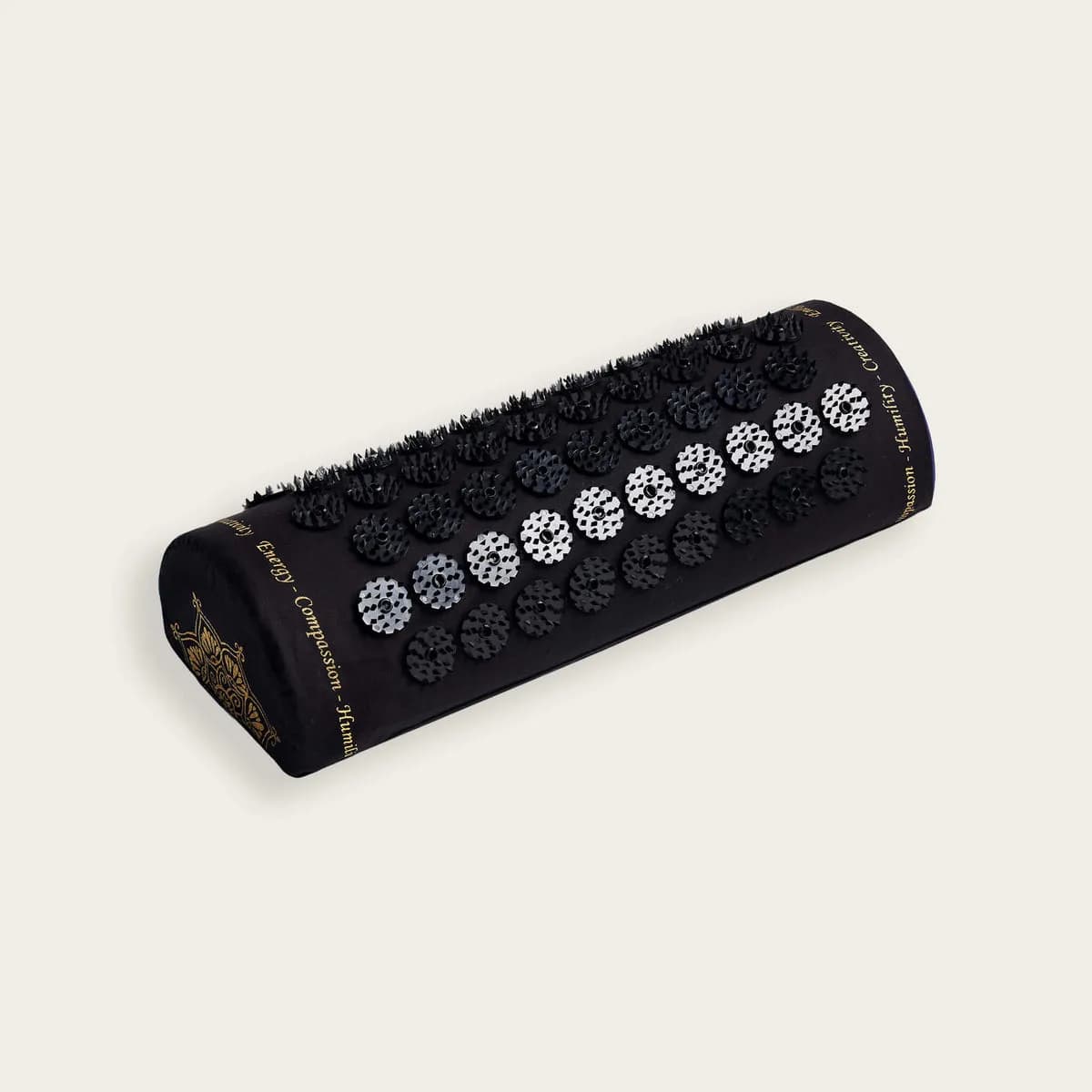
Some areas only need a few minutes of treatment, while others, like your back, may benefit from a bit longer. For your neck, you can roll up the mat or use an acupressure pillow: the Classic Shakti pillow is perfect for a stiff neck and sore shoulders, and the Premium pillow can also be placed behind an aching lower back or used to rest your legs on.
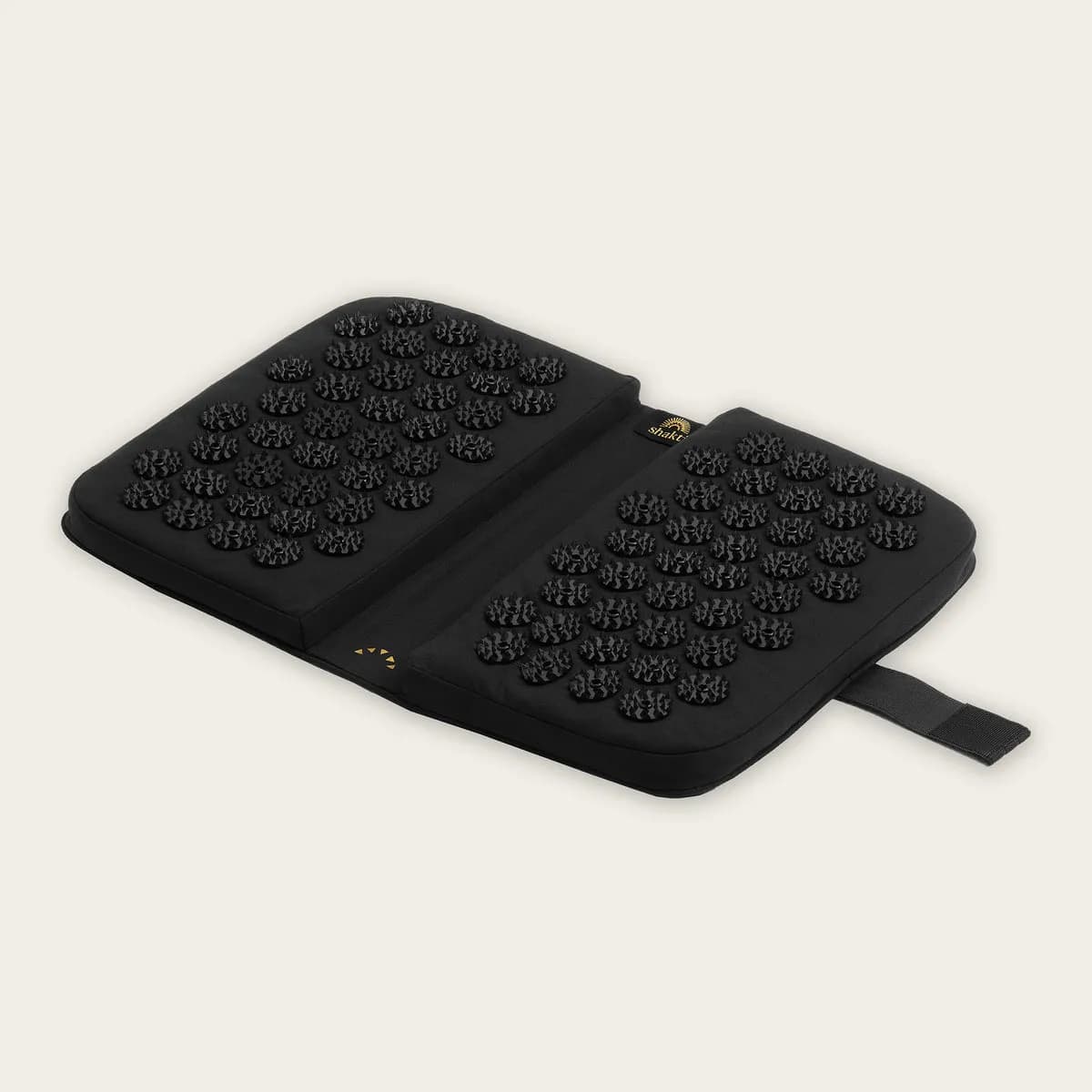
Your feet work well too, lying down or standing: simply step onto the mat. If you want something made specifically for feet, the Shakti Footpad has 2,640 spikes and 25 mm of dense memory foam that shapes itself to your foot.
Who should not use an acupressure mat?
This is the most important section on the page, and here we quote our own FAQ word for word: “Do not use the Shakti mat or its accessories if you have any of the following conditions:”
Coagulation problems or if you're taking blood-thinning medication. The Shakti mat can affect circulation and is therefore not recommended for people with circulation-related and/or blood coagulation problems.
Epilepsy – The Shakti mat is covered with thousands of sharp spikes and could be dangerous if a person has a seizure whilst using it.
Significant skin damage in the area where you intend to use the mat, including pronounced skin inflammation or large papillomas. Certain skin conditions may be worsened by the mat.
Neuropathy with loss of sensation or reduced sensation, as this can affect your ability to feel the sharpness of the spikes.
Pregnancy – Certain acupressure points are sometimes used to naturally induce labour.
Cardiovascular conditions – The Shakti mat can affect circulation and is therefore not recommended for people with heart and circulatory problems.
Thrombophlebitis – see coagulation problems and cardiovascular conditions above.
Fever or other acute illness.
If you have any other medical condition or illness, we recommend you consult your doctor before using the product. If you are pregnant, or planning to become pregnant, consult your doctor before use.
Pregnancy is on the list for a reason: Unfortunately, we don't recommend pregnant women use the Shakti mat, particularly during the first trimester. The Shakti mat uses acupressure, which in some cases has been used to naturally induce labour. Always consult your doctor before using the mat.
It's fine to use the Shakti mat if you have tattoos, but avoid using it during the healing period. Don't use the Shakti mat if you experience any irritation in the tattooed area. Always consult a doctor if you're unsure. Yes, children can use the Shakti mat. However, we recommend close supervision due to the sharpness of the spikes.
How do you get started – and which level should you choose?
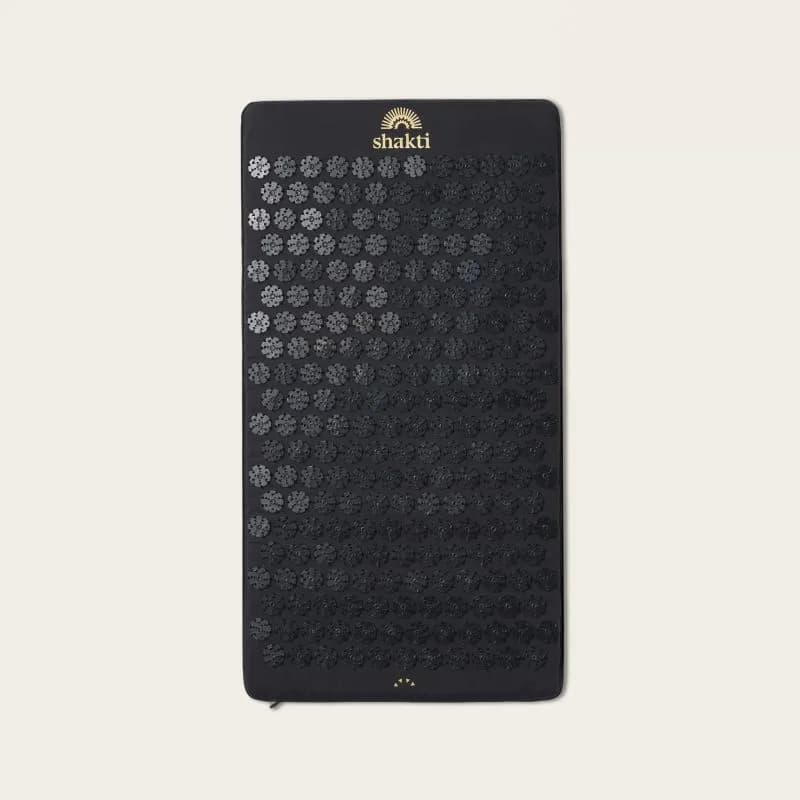
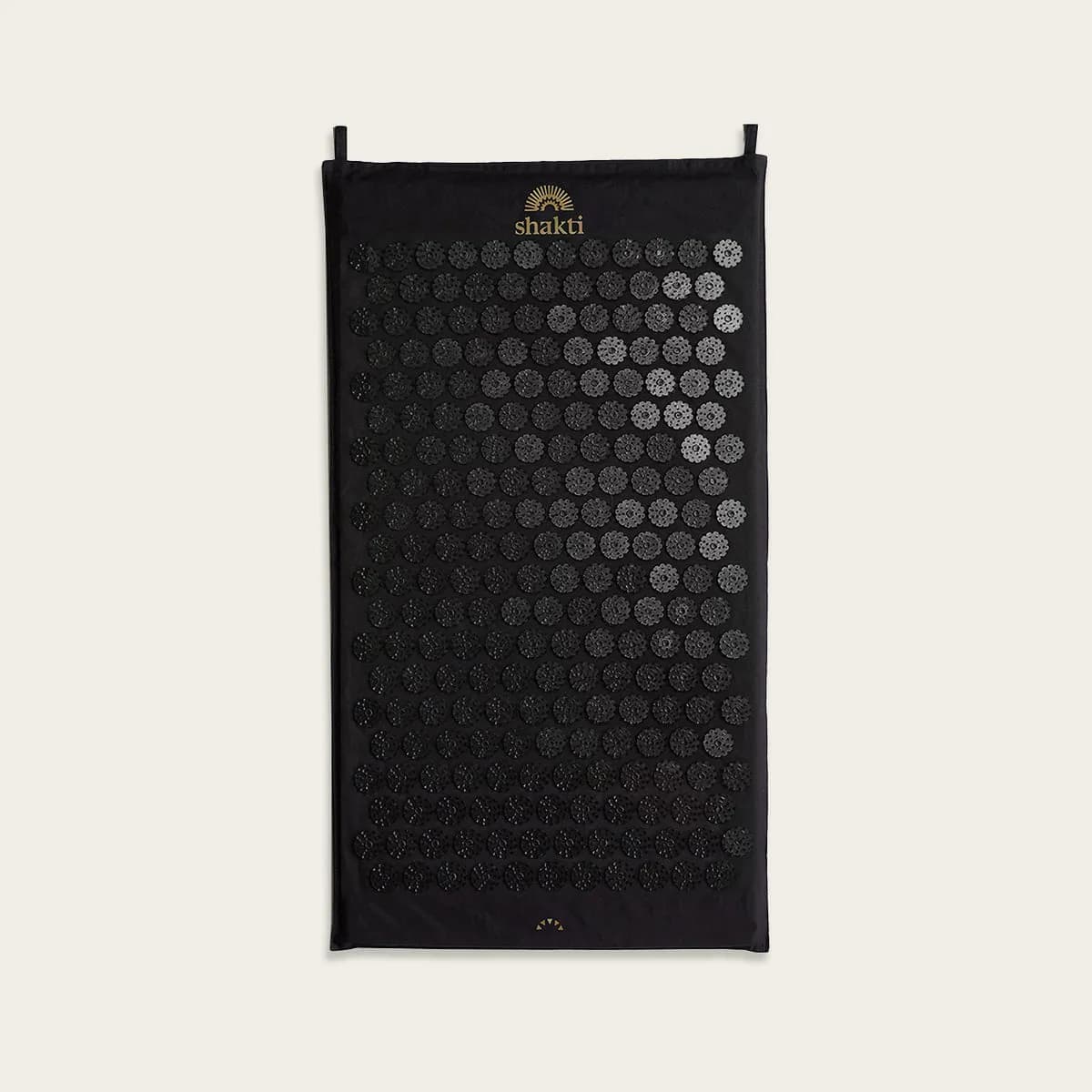
The levels are set by the number of spikes, and it works the opposite way to what most people guess: fewer spikes give a higher intensity, because your body weight is spread over fewer points. Level 1 (Light) has 8,280 spikes, Level 2 (Original) has 6,210, Level 3 (Advanced) has 4,140 and Level 4 (Ultra) has 2,070 – all spread across 230 discs.
Level 2 is the most popular level. With its 6,210 spikes, the Shakti Mat Original delivers a medium intensity that suits most people – in fact, a full 95% of users. If you're a beginner, Level 1 Light is perfect to start with and ideal for beginners to acupressure. Level 1 is available on the Shakti Premium Acupressure Mat, which comes in all four levels; the Classic Acupressure Mat is only available in Level 2 and Level 3.
We recommend 15–20 minutes to experience the full benefits of the acupressure; 20 minutes is the average. During your first few sessions you can wear a thin t-shirt or place a pillowcase over the mat – bare skin gives the best results, but it doesn't have to be from day one. A softer surface such as your bed or sofa provides a bit of extra support and can be a good place to start.
Skin sensitivity determines the experience, not weight. If the level feels wrong, you can exchange it for a different level within 30 days, and if you change your mind completely, our 30-day returns apply. Both apply to Shakti products bought directly from shaktimattan.se.
Products mentioned in the guide
More guides
- Best acupressure mat: how to choose the level, size and modelNo acupressure mat suits everyone. How to choose the right level, size and model – and the difference between Shakti Premium and Classic, plainly.
- How long should you lie on an acupressure mat – and how often?We recommend 15–20 minutes on an acupressure mat, with 20 minutes as the benchmark – and there are no frequency limits. Here's how long and how often.
- Acupressure pillow or mat for your neck and shoulders – how to use itAcupressure pillow or mat for your neck and shoulders? How to use acupressure on your neck, how long to lie on it and which level to choose.