Acupressure pillow or mat for your neck and shoulders – how to use it
An acupressure pillow is the most direct way to use acupressure on your neck: a spiked pillow you rest your head and neck on. Neck and shoulders are among the areas we suggest you start with – they often hold tension. If you lie on the acupressure mat, our own instruction applies: make sure your neck, shoulders and back are in contact with the spikes. If you want to target the neck specifically, there are two routes – roll up the mat, or use the acupressure pillow, which is shaped for exactly that. Here we go through how to use it, for how long, which level to choose and when not to use it at all.
Acupressure mat or pillow – which is better for your neck?
The Shakti mat works through direct contact. When the mat is against your body, the spikes gently press against your skin. Our own instruction when you lie on the mat is to make sure your neck, shoulders and back are in contact with the spikes.
The Premium mat can also be rolled up to treat your neck.
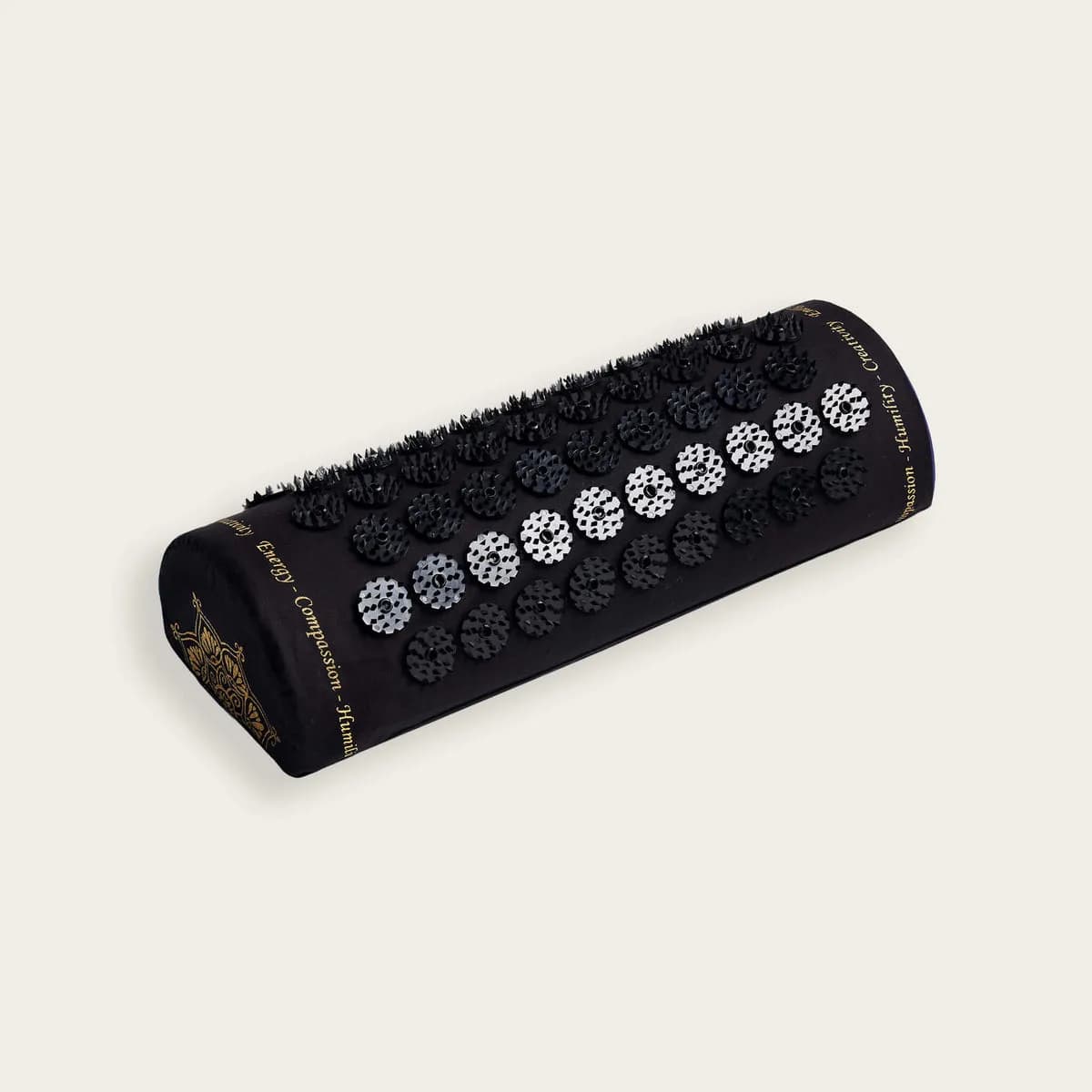
The Classic pillow is crescent-shaped, and we describe it as perfect if you carry tension in and around your neck. It is filled with a single piece of tried-and-tested foam that distributes the pressure evenly. The same pillow also works for your lower back and calves.
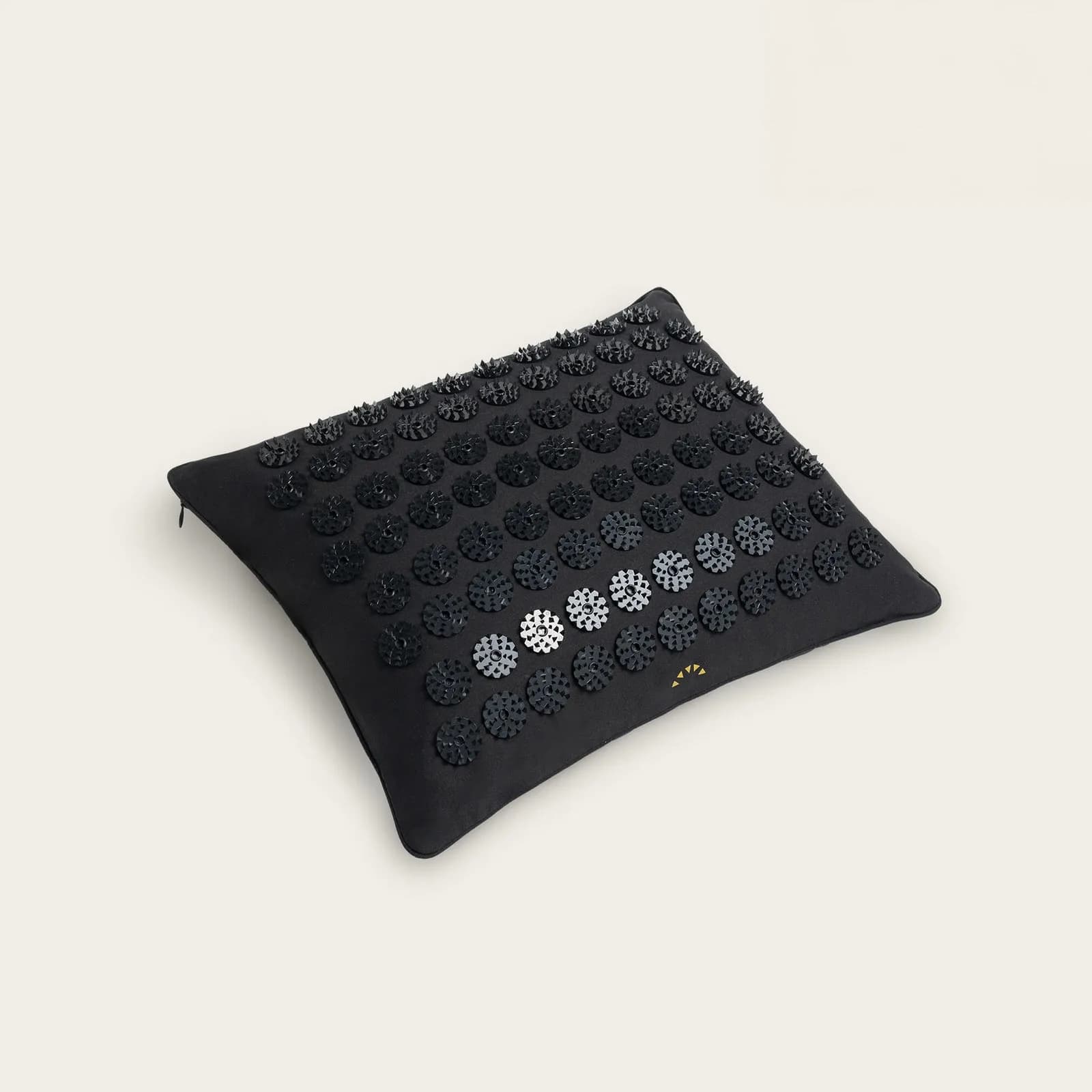
The Premium pillow has twice the surface area of the Classic pillow (45 × 36 × 9 cm) and a mouldable, shredded Blissfoam™ filling. That lets you treat your neck, shoulders and the back of your head in the same session, and raise or lower the pressure yourself.
How do you use an acupressure pillow for your neck – and for how long?
Our instruction for the Premium pillow is short: lie down with your head and neck on the pillow, close your eyes and allow around 20 minutes per session. We recommend 15–20 minutes to experience the full benefits of the acupressure.
Melting away tension usually takes around 10 minutes, but everyone is different. More tension and stiffness means more time to release.
A simple trick is to rest the Shakti pillow against a regular pillow. That way you find the perfect angle while you read or relax. The most popular way to use the Classic pillow is in bed, before you fall asleep.
Bare skin against the spikes gives the best results. During your first few sessions you can wear a thin t-shirt or place a pillowcase over the spikes while your body adjusts. There are no time or frequency restrictions for a Shakti session, and it's completely normal to fall asleep.
What can you expect – and what are the downsides?
Will it hurt? Yes, but only a little at first. After a few minutes the tingling turns into a deep, relaxing warmth. The redness left on your skin is simply a sign of increased circulation.
That is also the most honest downside: the first few minutes are uncomfortable, and the first time on a new area may feel extra tender. Your body adapts to the sensation over time. Some areas only need a few minutes, others – like your back – a bit longer.
The spikes are sharp, and that's the point. Because every Shakti product is handmade, a spike occasionally comes loose. If you still have both the spike and the backing disc, push the smaller disc up through the fabric and press the spike on top until you hear it click.
The bigger objection is that acupressure isn't for everyone. That is covered at the end of this guide.
Which level suits your neck and shoulders?
The levels are about how many spikes the pressure is spread across. Contrary to what you might think, fewer spikes give a more intense experience, because your body weight is concentrated on fewer points.
Level 1 Light has 36 spikes per disc, Level 2 Original has 27, Level 3 Advanced has 18 and Level 4 Ultra has 9. The Premium mat comes in all four levels, while the Classic mat is sold in Level 2 and Level 3. Both the Classic and the Premium pillow come in Levels 1 to 3. The Classic pillow's Level 1 (Yellow) is only available while stocks last.
Skin sensitivity determines the experience, not your weight. Our own view is that if you go too hard at the start, it's harder to build a lasting habit.
Unsure? There's a short test under Find Your Level. If the level feels wrong once you've tried it, you can exchange it for a different level within 30 days, as long as the product is in the same condition as when you received it. This applies to Shakti products bought directly from shaktimattan.se.
How do you fit your head, jaw and back into the same routine?
Tension in the neck rarely sits alone. The Shakti Acupress Headband has two rows with a total of 780 mini spikes and targets the forehead, temples and jaw. Use it for at least 15 minutes. The spikes are Level 1, because you control the intensity with the compression instead of gravity. One tip: turn the pressure up a notch by wrapping the band under the base of your skull and resting the back of your head on a yoga block.
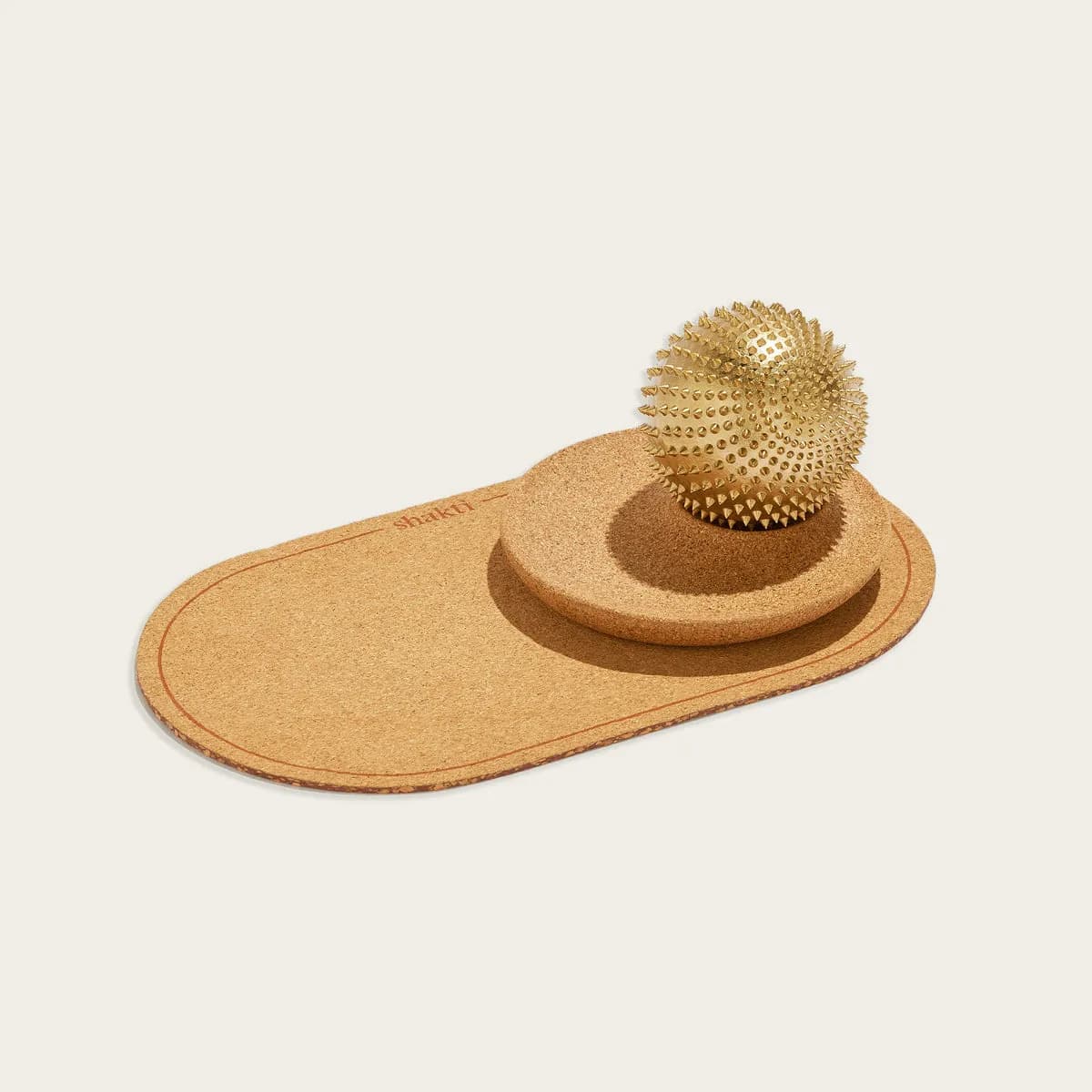
The Shakti Wonderball is an acupressure ball with 658 brass spikes that you roll over your palms, jaw, neck and the soles of your feet.
To cover both your back and your neck, combine a mat and a pillow: the mat takes your back, the pillow takes your neck, shoulders and the back of your head. It's the Premium pillow that covers all three in the same session.
When should you not use an acupressure pillow or mat?
This part is too important to rewrite, so it is quoted word for word from our own FAQ: “Do not use the Shakti mat or its accessories if you have any of the following conditions:”
Coagulation problems or if you're taking blood-thinning medication. The Shakti mat can affect circulation and is therefore not recommended for people with circulation-related and/or blood coagulation problems.
Epilepsy – The Shakti mat is covered with thousands of sharp spikes and could be dangerous if a person has a seizure whilst using it.
Significant skin damage in the area where you intend to use the mat, including pronounced skin inflammation or large papillomas. Certain skin conditions may be worsened by the mat.
Neuropathy with loss of sensation or reduced sensation, as this can affect your ability to feel the sharpness of the spikes.
Pregnancy – Certain acupressure points are sometimes used to naturally induce labour.
Cardiovascular conditions – The Shakti mat can affect circulation and is therefore not recommended for people with heart and circulatory problems.
Thrombophlebitis – see coagulation problems and cardiovascular conditions above.
Fever or other acute illness.
If you have any other medical condition or illness, we recommend you consult your doctor before using the product. If you are pregnant, or planning to become pregnant, consult your doctor before use.
Pregnancy is on the list for a reason: Unfortunately, we don't recommend pregnant women use the Shakti mat, particularly during the first trimester. The Shakti mat uses acupressure, which in some cases has been used to naturally induce labour. Always consult your doctor before using the mat.
It's fine to use the Shakti mat if you have tattoos, but avoid using it during the healing period. Don't use the Shakti mat if you experience any irritation in the tattooed area. Always consult a doctor if you're unsure.
Products mentioned in the guide
More guides
- Best acupressure mat: how to choose the level, size and modelNo acupressure mat suits everyone. How to choose the right level, size and model – and the difference between Shakti Premium and Classic, plainly.
- How long should you lie on an acupressure mat – and how often?We recommend 15–20 minutes on an acupressure mat, with 20 minutes as the benchmark – and there are no frequency limits. Here's how long and how often.
- Acupressure mat benefits: how it feels and who it suitsAn acupressure mat presses thousands of spikes against your skin. Here's what it does, what it's used for, who it suits – and who should avoid it.