Acupressure mat for your feet: stand on the mat or use the Footpad
Yes, you can stand on an acupressure mat – your feet are one of the places where the spikes are felt most clearly. You can stand with your feet on a regular acupressure mat, or use the Shakti Footpad, which is made for the soles of your feet and has a memory foam core that cushions the spikes. This guide covers the difference, how to control the pressure, how long to stand, and when not to use it at all.
Can you stand on an acupressure mat?
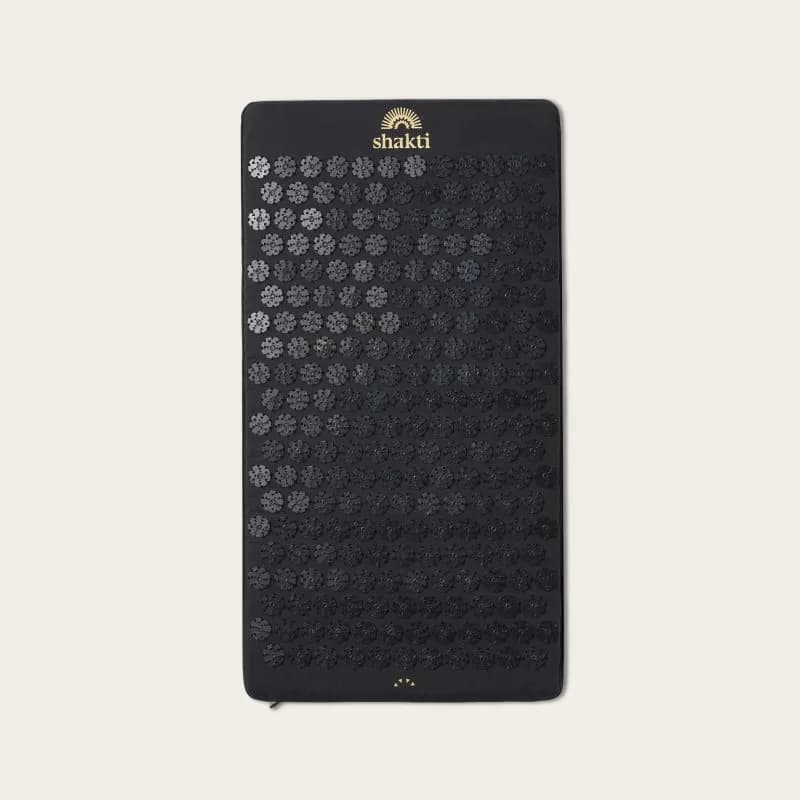
Yes. The most popular way to use the Shakti mat is to lie on it, but your feet are one of the areas we suggest you try – if you're feeling adventurous. The Premium mat's instructions say it plainly: you can also stand with your feet on the mat.
Standing is more intense than lying down, because your whole body weight rests on the soles of your feet. That's why it's wise to start seated, with your feet on the mat, and stand up only once you know how it feels.
Acupressure mat or Footpad – which suits your feet best?
A regular acupressure mat works, especially if you already have one. The Shakti Footpad is made specifically for feet, and the difference shows in two ways.
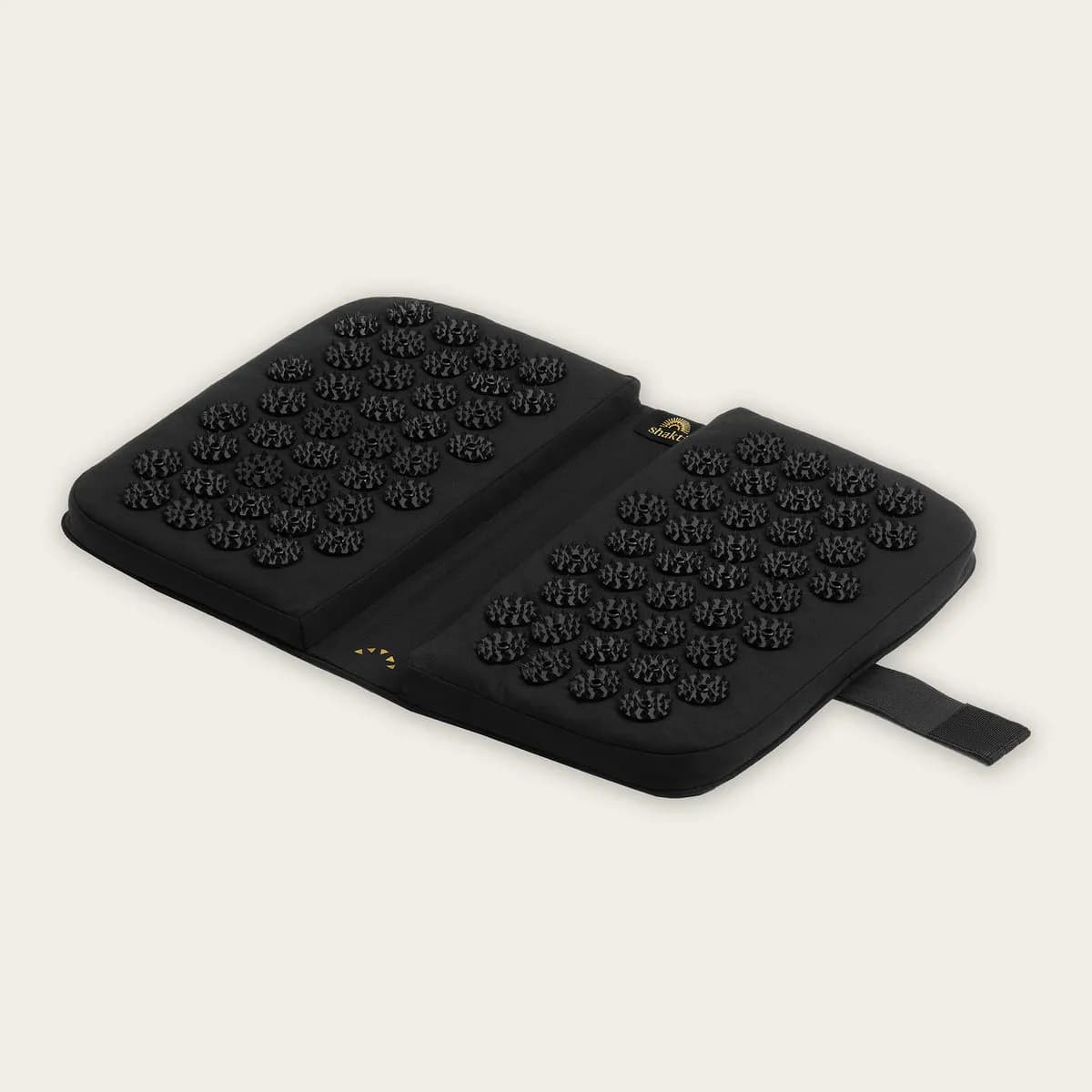
The surface is smaller than a mat's, and a smaller surface means more concentrated pressure per point. At the same time, the Footpad has a core of 25 mm dense memory foam that moulds itself to your foot and cushions the spikes, so they're more comfortable to stand on. The pressure is spread evenly from the ball to the heel.
The Footpad is also compact and foldable, with velcro fastening and a carry handle. It's just as at home by the bed as at the office or in your bag.
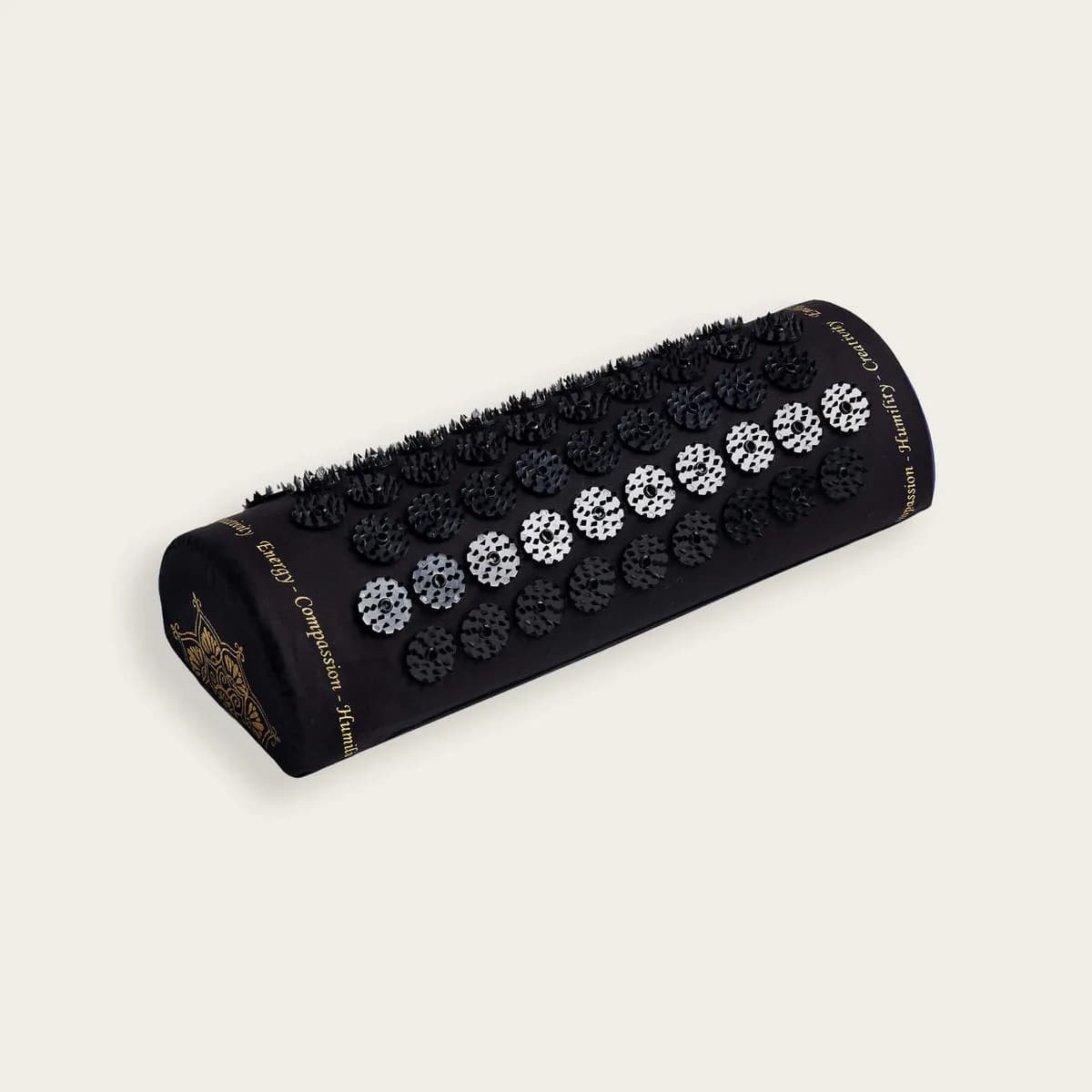
If you'd like something softer under your soles, the Classic Shakti pillow works too – its shape works just as well on tense foot soles as on your neck.
How do you use the Footpad?
What matters is that the soles of your feet rest against the spikes. The rest is up to you.
- Place the Footpad on the floor where you'll be standing or sitting for a while anyway.
- Start seated, or with socks, if you're new. Barefoot gives a stronger effect, socks a gentler start.
- Put your feet on the spikes with your heels off the pad for the first few sessions, and take it step by step.
- Control the pressure with your body weight: lean forward for more, sit down for less.
- Stay for 5–15 minutes, or stand on it while you do something else.
How long should you stand on an acupressure mat – and when?
5–15 minutes is enough. Use the Footpad in the morning for energy, after training for recovery or in the evening to wind down – pick the moment that fits your day.
Many people happily stand for 5–20 minutes during their everyday rituals. Our best tip is to pair the Footpad with something you already do every day – brushing your teeth, the morning coffee or time at your desk – and keep it visible, so the routine takes care of itself.
If you stand on a regular acupressure mat, the same applies: start short, and stay longer once you're used to it.
What does standing on an acupressure mat feel like?
The first sensation is sharp. A smaller surface and your whole body weight give a concentrated pressure, so start seated or with socks and shift your weight to control the intensity.
After a minute or so, a warm, tingling sensation spreads up through the body, and your feet feel warm and awake. The redness is simply a sign of increased circulation.
What is the Footpad made of?
The Footpad has 2,640 hand-cut ABS plastic spikes at Level 2 intensity and a core of 25 mm dense memory foam. The surface material is water-repellent, PU-treated organic cotton, and the fabric is GOTS-certified.
It measures 44 × 32 × 3 cm and weighs 0.45 kg. It comes in two colours, Tulsi and Black, and is made by hand in India with our Fairtrade partners at Kishor Exports.
Who should not use an acupressure mat on their feet?
The same rules apply to your feet as to the rest of your body, and the Footpad is one of the mat's accessories. Neuropathy with reduced sensation is on the list for a reason that matters especially for feet: it can affect your ability to feel the sharpness of the spikes. That's why we quote our FAQ word for word: “Do not use the Shakti mat or its accessories if you have any of the following conditions:”
Coagulation problems or if you're taking blood-thinning medication. The Shakti mat can affect circulation and is therefore not recommended for people with circulation-related and/or blood coagulation problems.
Epilepsy – The Shakti mat is covered with thousands of sharp spikes and could be dangerous if a person has a seizure whilst using it.
Significant skin damage in the area where you intend to use the mat, including pronounced skin inflammation or large papillomas. Certain skin conditions may be worsened by the mat.
Neuropathy with loss of sensation or reduced sensation, as this can affect your ability to feel the sharpness of the spikes.
Pregnancy – Certain acupressure points are sometimes used to naturally induce labour.
Cardiovascular conditions – The Shakti mat can affect circulation and is therefore not recommended for people with heart and circulatory problems.
Thrombophlebitis – see coagulation problems and cardiovascular conditions above.
Fever or other acute illness.
If you have any other medical condition or illness, we recommend you consult your doctor before using the product. If you are pregnant, or planning to become pregnant, consult your doctor before use.
Pregnancy is on the list for a reason: Unfortunately, we don't recommend pregnant women use the Shakti mat, particularly during the first trimester. The Shakti mat uses acupressure, which in some cases has been used to naturally induce labour. Always consult your doctor before using the mat.
It's fine to use the Shakti mat if you have tattoos, but avoid using it during the healing period. Don't use the Shakti mat if you experience any irritation in the tattooed area. Always consult a doctor if you're unsure. Yes, children can use the Shakti mat. However, we recommend close supervision due to the sharpness of the spikes.
Frequently asked questions
Is an acupressure mat good for your feet?
Many people like using it on their feet – the soles are one of the places where the spikes are felt most clearly, and after a minute or so a warm, tingling sensation usually spreads. We describe the experience, but we don't promise any health effects.
Can you stand on an acupressure mat?
Yes. You can stand with your feet on the mat, or use the Shakti Footpad, which is made for the soles of your feet. Start seated if you can, as standing is more intense.
How long should you stand on an acupressure mat?
5–15 minutes is enough. Many people stand for 5–20 minutes while doing something else, such as brushing their teeth or drinking their morning coffee.
Should you wear socks?
It's up to you. Barefoot gives a stronger effect, and socks give a gentler start when you're new.
What level is the Footpad?
The spikes are Level 2 intensity. You control the pressure with your body weight: lean forward for more, sit down for less.
How do you clean the Footpad?
Remove the foam filling and hand-wash the cover in lukewarm water with a little mild detergent. Air dry and avoid direct sunlight. The water-repellent base wipes clean easily with a damp cloth.
Products mentioned in the guide
More guides
- Best acupressure mat: how to choose the level, size and modelNo acupressure mat suits everyone. How to choose the right level, size and model – and the difference between Shakti Premium and Classic, plainly.
- How long should you lie on an acupressure mat – and how often?We recommend 15–20 minutes on an acupressure mat, with 20 minutes as the benchmark – and there are no frequency limits. Here's how long and how often.
- Acupressure mat benefits: how it feels and who it suitsAn acupressure mat presses thousands of spikes against your skin. Here's what it does, what it's used for, who it suits – and who should avoid it.