Acupressure mat side effects: what's normal and who shouldn't use one
Acupressure mat side effects are, in practice, sensations: it prickles and feels uncomfortable for the first few minutes, then a tingling warmth spreads, and afterwards your skin is red where the spikes have been. That's how the mat is meant to feel. But there are also conditions where an acupressure mat shouldn't be used at all, and we quote those word for word further down. This page only describes what we have a source for: what's normal during and after a session, what to do if it feels too intense, and who should stay off the mat.
What side effects can an acupressure mat have?
An acupressure mat is a mat with thousands of sharp spikes that press against your skin when you lie on it, so your body weight is spread across thousands of small points. What people call side effects is what that pressure feels like.
Three things come up again and again in our own description of the experience. The first is that it feels uncomfortable and prickly at first. The second is a tingling, warming sensation that spreads after a few minutes, much like deep heat. The third is redness: your skin turns red where the spikes have been, and the redness is a sign of increased circulation in the area.
Beyond that, an area you use the mat on for the first time may feel tender, and many people relax so deeply that they fall asleep. That's as far as our description goes, and we make no medical assessments. If you have a medical condition, the list further down applies – it's a prohibition, not a piece of advice.
Does an acupressure mat hurt for the first few minutes?
Yes, a little at first. For most people the experience feels uncomfortable to begin with, and the body often enters a kind of resistance mode, especially if you're carrying physical or mental stress. After around 5–10 minutes the discomfort usually turns into relaxation.
How long it takes is individual. We all have different sensitivities: some people need just a few minutes to get used to the mat, others a few sessions or a couple of weeks. Over time your body adapts to the initial discomfort.
What decides how the mat feels is skin sensitivity, not body weight. And the more you tense up and fight against the spikes, the more you'll feel them. Use your breathing to calm your body, or distract yourself with a book, a podcast or a TV series.
Why does your skin turn red after an acupressure mat?
The redness comes from the spikes pressing against your skin. Our product descriptions call it a sign of increased circulation in the area, and it's part of what you can expect after a session on the mat – just like the warmth.
We don't give a time for how long the redness stays visible, because we have no figure we can stand behind. What we do know is that the experience is decided by skin sensitivity, and that differs from person to person.
Bare skin gives the most contact with the spikes. If you want to dial down the intensity during your first few sessions, you can wear a thin t-shirt or place a pillowcase over the mat while your body adjusts.
Who shouldn't use an acupressure mat?
This is the most important section on the page, and here we quote our own FAQ word for word: “Do not use the Shakti mat or its accessories if you have any of the following conditions:” Coagulation problems or if you're taking blood-thinning medication. The Shakti mat can affect circulation and is therefore not recommended for people with circulation-related and/or blood coagulation problems. Epilepsy – The Shakti mat is covered with thousands of sharp spikes and could be dangerous if a person has a seizure whilst using it. Significant skin damage in the area where you intend to use the mat, including pronounced skin inflammation or large papillomas. Certain skin conditions may be worsened by the mat. Neuropathy with loss of sensation or reduced sensation, as this can affect your ability to feel the sharpness of the spikes. Pregnancy – Certain acupressure points are sometimes used to naturally induce labour. Cardiovascular conditions – The Shakti mat can affect circulation and is therefore not recommended for people with heart and circulatory problems. Thrombophlebitis – see coagulation problems and cardiovascular conditions above. Fever or other acute illness.
If you have any other medical condition or illness, we recommend you consult your doctor before using the product. If you are pregnant, or planning to become pregnant, consult your doctor before use.
Pregnancy is on the list for a reason: we don't recommend pregnant women use the Shakti mat, particularly during the first trimester. The Shakti mat uses acupressure, which in some cases has been used to naturally induce labour. Always consult your doctor before using the mat.
Tattoos are fine, but avoid using the mat during the healing period, and don't use it if you experience any irritation in the tattooed area. Children can use the Shakti mat, but we recommend close supervision due to the sharpness of the spikes.
What do you do if the acupressure mat feels too intense?
If the mat feels too intense, it's usually the level, the surface or the time that can be changed. All Shakti levels have the same sharp spikes – the difference is how many there are. Fewer spikes give a more intense experience, because your body weight is spread across fewer points.
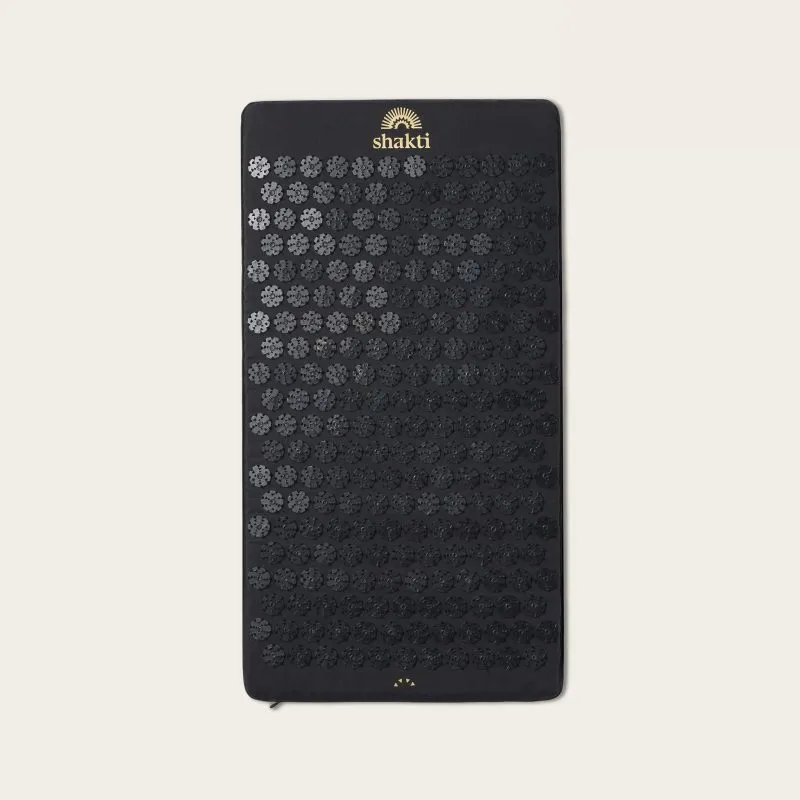
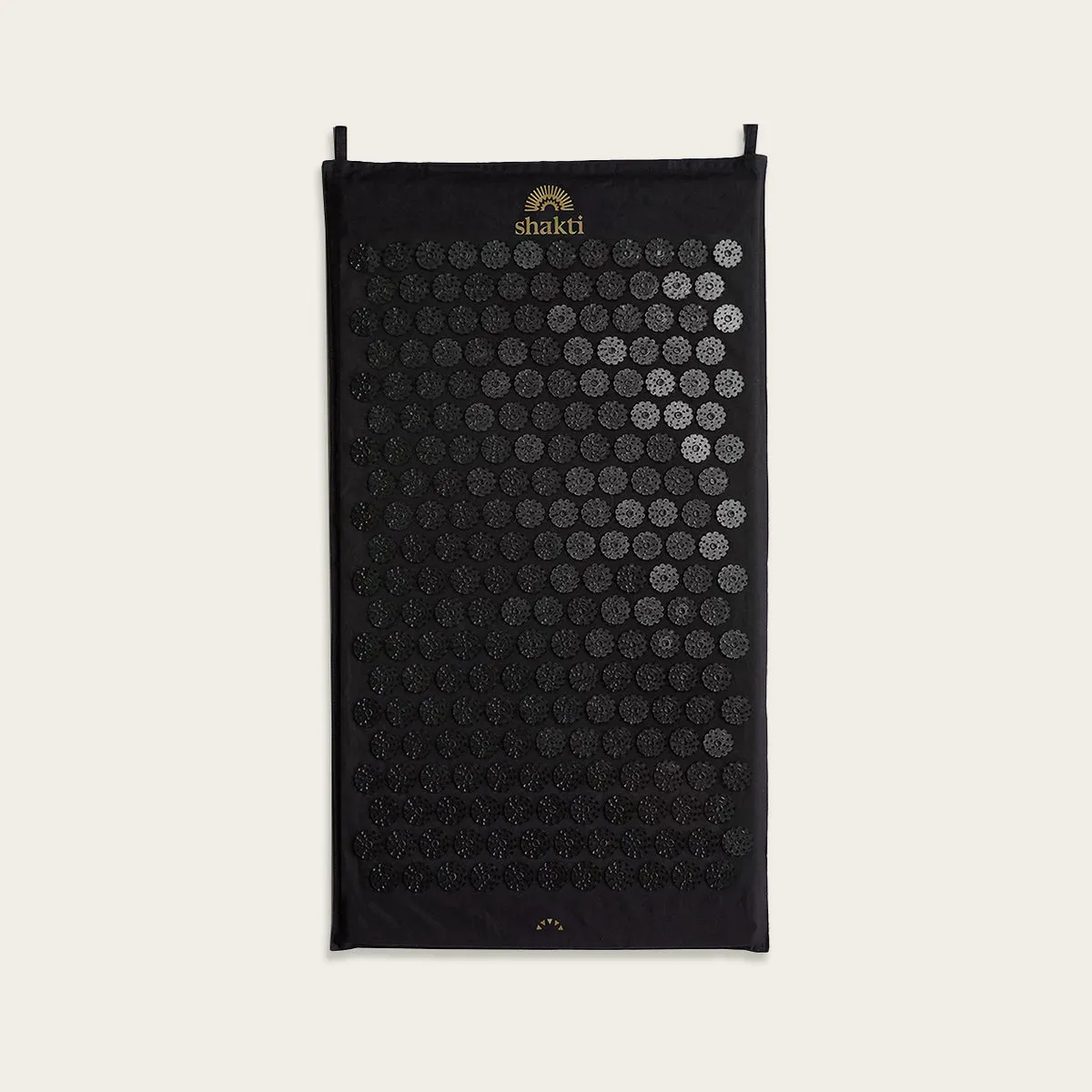
Level 1 has 8,280 spikes and is the gentlest level, Level 2 has 6,210 and Level 4 has 2,070. The Premium mat comes in all four levels, the Classic mat in levels 2 and 3. So if you want the gentlest start, it's the Premium mat in Level 1.
If your mat or pillow feels too mild or too intense, you can exchange it for a different level within 30 days, as long as the product is in the same condition as when you received it. This applies to products purchased directly from shaktimattan.se, with one exchange per order.
- Place a pillowcase over the mat or wear a thin t-shirt for your first few sessions.
- Start on a softer surface, such as your bed or the sofa – it gives a bit of extra support.
- Lie down slowly and breathe calmly. The more you tense up against the spikes, the more you'll feel them.
- Start with short sessions and extend them once your body has adjusted; we recommend 15–20 minutes to experience the full benefits of the acupressure.
- If the level still feels wrong, exchange it for a different level within 30 days.
Can you lie on an acupressure mat for too long or too often?
We set no time or frequency restrictions for Shakti sessions, and it's completely normal to fall asleep on the mat. We recommend 15–20 minutes to experience the full benefits of the acupressure, but that's a benchmark, not a ceiling.
Some areas only need a few minutes, while others, like your back, may benefit from a bit longer. The first time on a new area may feel tender, but your body adapts to the sensation over time.
If you'd like to read more about timing and routines, see our guide How long should you lie on an acupressure mat – and how often? How the mat feels and what it's used for is covered in our guide Acupressure mat benefits: how it feels and who it suits. This page doesn't repeat them.
Finally, what we don't comment on. We describe sensations – prickling, warmth, redness – and say nothing about symptoms or illnesses. If you experience anything beyond what's described here, or have a medical condition that isn't on the list, we recommend you consult your doctor before using the mat.
Frequently asked questions
What are the side effects of an acupressure mat?
What people call side effects are sensations: it prickles and feels uncomfortable at first, then comes a tingling warmth, and your skin turns red where the spikes have been. If you have any of the conditions in the list above, you shouldn't use the mat at all.
Is it dangerous to lie on an acupressure mat?
The spikes are sharp, which is why there's a list of conditions where the Shakti mat must not be used – the full list is above. If you have any other medical condition, we recommend you consult your doctor first.
Why does my skin go red after using an acupressure mat?
The redness comes from the spikes pressing against your skin and is a sign of increased circulation in the area. We don't give a time for how long it stays visible.
Does it hurt to lie on an acupressure mat?
Yes, a little at first. For most people it feels uncomfortable and prickly, but after around 5–10 minutes the discomfort usually turns into relaxation.
Does an acupressure mat have any downsides?
The first few minutes feel sharp, your skin is red afterwards and it can take a few sessions to get used to. There are also conditions where the mat shouldn't be used at all – see the list above.
Can you lie on an acupressure mat for too long?
We set no time or frequency restrictions for Shakti sessions, and it's completely normal to fall asleep on the mat. We recommend 15–20 minutes each time.
Can children use an acupressure mat?
Yes, children can use the Shakti mat, but we recommend close supervision due to the sharpness of the spikes.
Want to try one? See the four levels of the acupressure mat
Products mentioned in the guide
More guides
- Best acupressure mat: how to choose the level, size and modelNo acupressure mat suits everyone. How to choose the right level, size and model – and the difference between Shakti Premium and Classic, plainly.
- How long should you lie on an acupressure mat – and how often?We recommend 15–20 minutes on an acupressure mat, with 20 minutes as the benchmark – and there are no frequency limits. Here's how long and how often.
- Acupressure mat benefits: how it feels and who it suitsAn acupressure mat presses thousands of spikes against your skin. Here's what it does, what it's used for, who it suits – and who should avoid it.