Meditation cushion: how to sit, for how long and how to choose
A meditation cushion is a thick floor cushion that raises your hips so they sit above your knees. That makes it easier to sit with a straight back for longer. This guide covers how to sit on the cushion, for how long, what to look for when choosing one – and what a removable acupressure plate adds, and when it shouldn't be used.
What does a meditation cushion do?
A meditation cushion gives you height when you sit on the floor. With your hips above your knees, it's easier to keep your back straight, and that's the posture our own instructions start from: cross-legged or kneeling, straight back and hips above your knees.
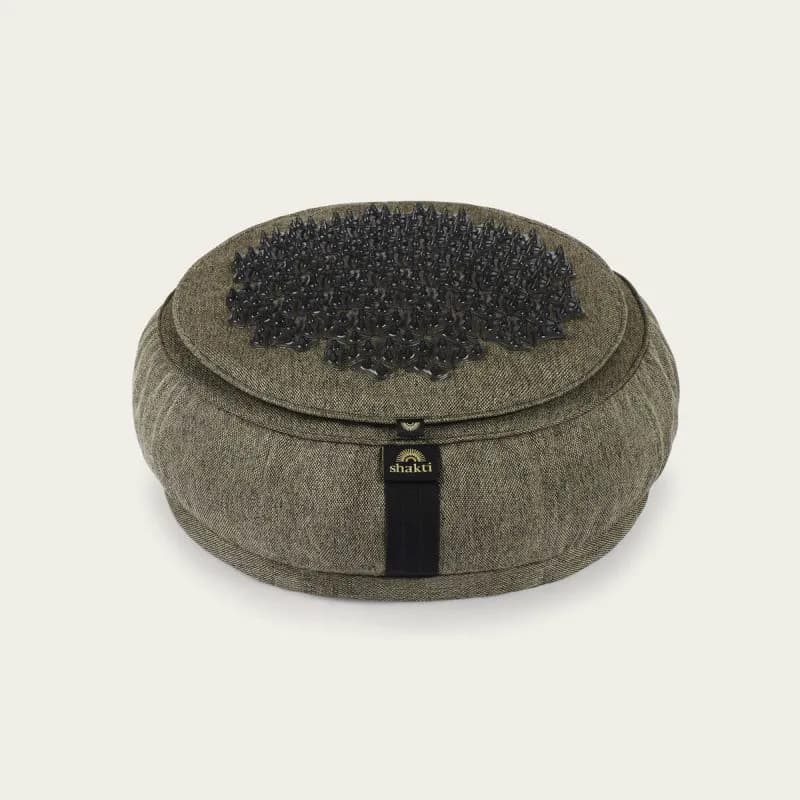
The Shakti Meditation Cushion is 18 cm high and 38.5 cm in diameter. The filling is a blend of memory foam and shredded eco latex, and the height can be adjusted – so your back stays straight and you sit centred without soreness, even on days when your body feels different. No two days are the same, and the cushion knows that too.
The cushion also has a removable acupressure plate. It's a choice, not a requirement: without the plate it's an ordinary meditation cushion, with the plate you sit on 276 spikes. More on that further down.
How do you sit on a meditation cushion?
Our instructions are short, and they work whether or not you use the acupressure plate.
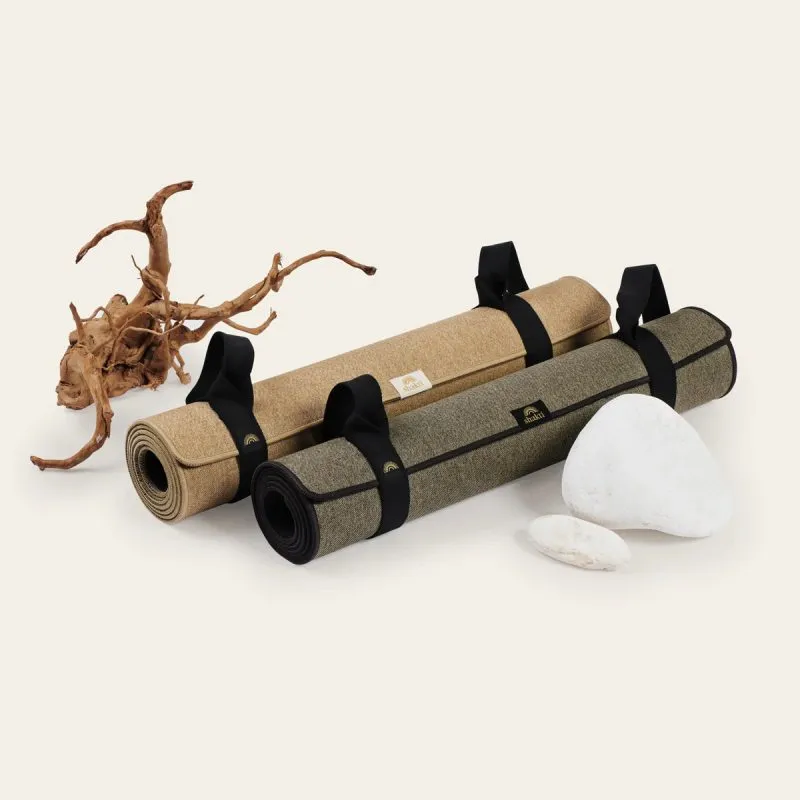
If you kneel, a soft surface under your knees is comfortable. The Shakti yoga mat's soft natural base is kind to tender knees, and the cushion's cover is made to match it.
- Place the cushion on a yoga mat or another soft surface.
- If you're using the acupressure plate: place it on top of the cushion with the spikes facing up, and start with thicker clothing to get used to it.
- Sit cross-legged or kneeling.
- Straighten your back and make sure your hips are above your knees. If you need more or less height, the filling can be adjusted.
- Close your eyes and breathe deeply.
How long should you sit on a meditation cushion?
Our product instructions say 15–20 minutes. That's the same time we recommend on the acupressure mat, so if you're used to a session on the mat, you'll recognise it.
With the acupressure plate, the instruction is to let the spikes anchor your mind in the present for the first 5 minutes, then stay seated for the rest of the time.
15–20 minutes isn't a requirement from day one. Just as on the acupressure mat, you can start with shorter sessions and stay longer when you want to go deeper. Set a timer if you like, so you don't have to keep an eye on the clock.
What should you look for when choosing a meditation cushion?
Height matters most. The cushion should raise your hips so they sit above your knees, which is why an adjustable height is an advantage – your body isn't the same every day.
The filling decides how the cushion feels. In the Shakti Meditation Cushion it's memory foam and shredded eco latex, which support your posture and can be adjusted in height.
Think about weight and format too. The cushion weighs 2.5 kg and has a practical, elastic carry handle, and the polyester cover is durable and lightweight. It comes in two earthy tones: sandalwood and granite black.
And consider whether you want acupressure. That's what sets the Shakti cushion apart from an ordinary meditation cushion – but the plate is removable, so you don't have to decide once and for all.
Why a meditation cushion with acupressure?
The acupressure plate is made of memory foam and has 276 ABS1 plastic spikes. You place it on top of the cushion with the spikes facing up, and when you're not using it, it's stored in a hidden zipped compartment in the cushion.
Yogis traditionally sat on beds of nails to meditate, and the plate is our take on that idea. Many people find that the pressure draws their attention into the body and to the here and now, a bit like lying down on the acupressure mat. Switch off the cinema in your head, switch on the present – that's the experience we describe, not an effect we promise.
If you don't want spikes one day, take the plate off. Spikes today, relaxation mode tomorrow.
When should you not use the acupressure plate?
The plate is an acupressure tool, and the same rules apply as for the acupressure mat and its accessories. That's why we quote our FAQ word for word: “Do not use the Shakti mat or its accessories if you have any of the following conditions:”
Coagulation problems or if you're taking blood-thinning medication. The Shakti mat can affect circulation and is therefore not recommended for people with circulation-related and/or blood coagulation problems.
Epilepsy – The Shakti mat is covered with thousands of sharp spikes and could be dangerous if a person has a seizure whilst using it.
Significant skin damage in the area where you intend to use the mat, including pronounced skin inflammation or large papillomas. Certain skin conditions may be worsened by the mat.
Neuropathy with loss of sensation or reduced sensation, as this can affect your ability to feel the sharpness of the spikes.
Pregnancy – Certain acupressure points are sometimes used to naturally induce labour.
Cardiovascular conditions – The Shakti mat can affect circulation and is therefore not recommended for people with heart and circulatory problems.
Thrombophlebitis – see coagulation problems and cardiovascular conditions above.
Fever or other acute illness.
If you have any other medical condition or illness, we recommend you consult your doctor before using the product. If you are pregnant, or planning to become pregnant, consult your doctor before use.
Pregnancy is on the list for a reason: Unfortunately, we don't recommend pregnant women use the Shakti mat, particularly during the first trimester. The Shakti mat uses acupressure, which in some cases has been used to naturally induce labour. Always consult your doctor before using the mat.
It's fine to use the Shakti mat if you have tattoos, but avoid using it during the healing period. Don't use the Shakti mat if you experience any irritation in the tattooed area. Always consult a doctor if you're unsure. Yes, children can use the Shakti mat. However, we recommend close supervision due to the sharpness of the spikes.
Without the acupressure plate, the cushion is an ordinary seat cushion for meditation.
How do you care for the meditation cushion?
The cushion and the acupressure plate should only be spot-cleaned by hand with a mild detergent and air-dried flat. Do not dry clean them, and they're not suitable for washing machines or tumble dryers.
When you're not using the plate, it sits in the hidden zipped compartment, so it doesn't go missing. The carry handle makes it easy to take the cushion wherever you practise – to yoga, to the living room or to a quiet corner at home.
Frequently asked questions
How do I start meditating at home?
Place a meditation cushion on a yoga mat or another soft surface, sit cross-legged or kneeling with a straight back and your hips above your knees, close your eyes and breathe deeply. Our instructions say 15–20 minutes, but you can start with shorter sessions.
What is a meditation cushion?
A thick floor cushion that raises your hips above your knees, so your back can stay straight while you meditate. The Shakti Meditation Cushion is 18 cm high and has a removable acupressure plate.
How high should a meditation cushion be?
High enough that your hips sit above your knees and your back can stay straight. The Shakti Meditation Cushion is 18 cm high, and its memory foam and shredded eco latex filling can be adjusted in height.
Can I use the meditation cushion without spikes?
Yes. The acupressure plate is removable and stored in a hidden zipped compartment. Without it, it's an ordinary meditation cushion.
How long should you sit on a meditation cushion?
We recommend 15–20 minutes. With the acupressure plate, let the spikes anchor you in the present for the first 5 minutes, then stay seated.
Can I put the meditation cushion on a yoga mat?
Yes, that's how we suggest you use it: on the Shakti yoga mat or another soft surface. The cushion's cover is made to match the yoga mat.
Products mentioned in the guide
More guides
- Best acupressure mat: how to choose the level, size and modelNo acupressure mat suits everyone. How to choose the right level, size and model – and the difference between Shakti Premium and Classic, plainly.
- How long should you lie on an acupressure mat – and how often?We recommend 15–20 minutes on an acupressure mat, with 20 minutes as the benchmark – and there are no frequency limits. Here's how long and how often.
- Acupressure mat benefits: how it feels and who it suitsAn acupressure mat presses thousands of spikes against your skin. Here's what it does, what it's used for, who it suits – and who should avoid it.